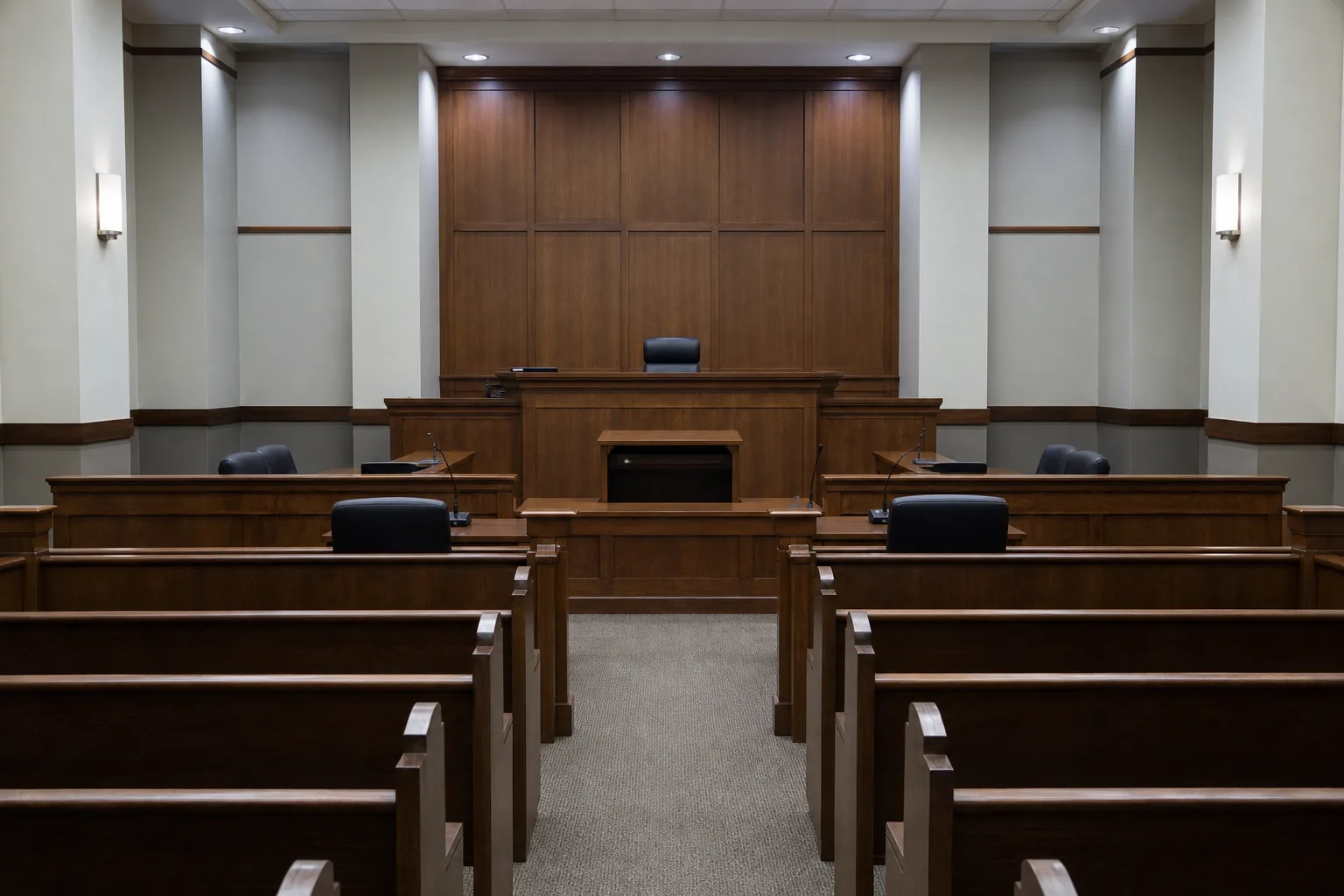
A fee quote for a moving violation usually arrives as a single number with no itemization behind it, which leaves the driver guessing whether several hundred dollars buys a morning of skilled work or a signature on a form. The honest answer is that it buys a specific, short list of tasks, most of which happen before anyone stands up in the courtroom. Knowing that list is the only way to judge whether the price is fair, and it is also the only way to understand why two drivers paying the same fee can walk out with different results.
The appearance is the largest single thing you are buying
On most ordinary citations in most states, a retained attorney can appear on the driver's behalf, and the driver never sets foot in the building. That sounds like convenience, and it is, but the second-order effect is the one worth pricing. A morning docket does not run on your schedule. Arrive at eight thirty, get called at eleven forty, and the day is gone, along with any wage or shift or client meeting attached to it. Against that, a few hundred dollars stops looking like a luxury and starts looking like an hourly comparison you can actually run.
The comparison has a second half people skip. Contested matters frequently get continued, meaning a second date, sometimes a third, each one another morning off. A driver representing himself absorbs every one of those. An attorney who is already in that courtroom on eleven other files absorbs none of them, because the marginal cost of your continuance to him is close to zero. That asymmetry, not eloquence, is most of what the flat fee is arbitraging.
Reading the file before anyone speaks
Before the negotiation there is a reading. The officer's narrative gets compared against the citation itself, and against whatever the agency produces on request: the in-car video, the radar or lidar unit's calibration and certification records, the officer's training documentation, and the dispatch log with its timestamps. Most of the time nothing in that stack is dramatic. Occasionally a detail is off, a stated location that does not match the video, a certification date that fell outside the window, a speed on the ticket that the narrative does not support, and that detail becomes the reason a prosecutor agrees to something he would otherwise refuse.
What this reading really produces is a realistic estimate. An attorney who has watched the video knows within a few minutes whether this is a file worth contesting or a file worth resolving quickly on the best available terms. A driver without access to that material is negotiating blind, and blind negotiation in a courtroom tends to end with the driver accepting the first thing offered, because he has no basis on which to say no.
The conversation that happens before the judge takes the bench
Most moving violations are resolved in a hallway or at a table in the well of the courtroom, in a short conversation with a prosecutor working through fifty files at once. That conversation is the product. Firms that describe themselves as Traffic Attorneys are, in practice, selling standing in that specific room, familiarity with which reductions that particular office grants routinely, and the ability to ask for one in the twenty seconds available without wasting the prosecutor's time. Reputation is currency there, and it is not currency an individual driver can carry in for one morning.
The realistic menu is narrower than most people expect. Amendment to a non-moving violation, reduction to a lower speed that carries fewer points, a deferral or continuance that dismisses the charge if the driver stays clean for some months, or an agreed dismissal where the evidence is genuinely weak. Which of those exists at all is set by state law and by local office policy, and no fee changes the menu. The lawyer's job is to know which item is available and to ask for it well.
Afterward, and what the court controls instead
The paperwork phase is unglamorous and it is where self-represented drivers most often lose the benefit they won. A deferral has conditions and a deadline. A reduction has to be entered correctly so it reports to the state driver record as the amended charge and not the original one. Court costs must be paid within a stated window or the disposition can unwind, sometimes into a suspension. An attorney tracks those dates and confirms the abstract that reaches the DMV matches the deal. That confirmation is worth more than the fee if it prevents one erroneous point.
What no fee buys is the outcome. The judge controls the ruling, the prosecutor controls the offer, the legislature controls the point schedule, and the insurer controls what it does with the record afterward. Traffic safety and driver behavior on the interstate system fall under the National Highway Traffic Safety Administration's remit, but the consequence attached to your particular citation is set locally, and it is set by people the attorney can persuade but cannot direct. Anyone quoting a guaranteed dismissal is selling something else entirely.
Priced honestly, the decision comes down to the value of the mornings you keep, the value of the points you might avoid, and the cost of the insurance surcharge that follows a conviction for three years or more. Run those three numbers against the quote. For a first minor citation the math often says handle it yourself; for a second one, or anything touching a commercial license, it usually says otherwise.